
By Julia de Schultz, September 16, 2025

Here’s something wild: right now, even if you’re curled on the sofa or lying in bed reading this, your body is pulling off thousands of life-saving acts you’ll never see. Cells are repairing, hormones are whispering instructions, your immune army is on patrol, and you don’t have to ask it to.
That blows my mind. We live in these bodies every single day, yet most of the time we forget just how smart they are. The very thing keeping us alive is also invisible to us.
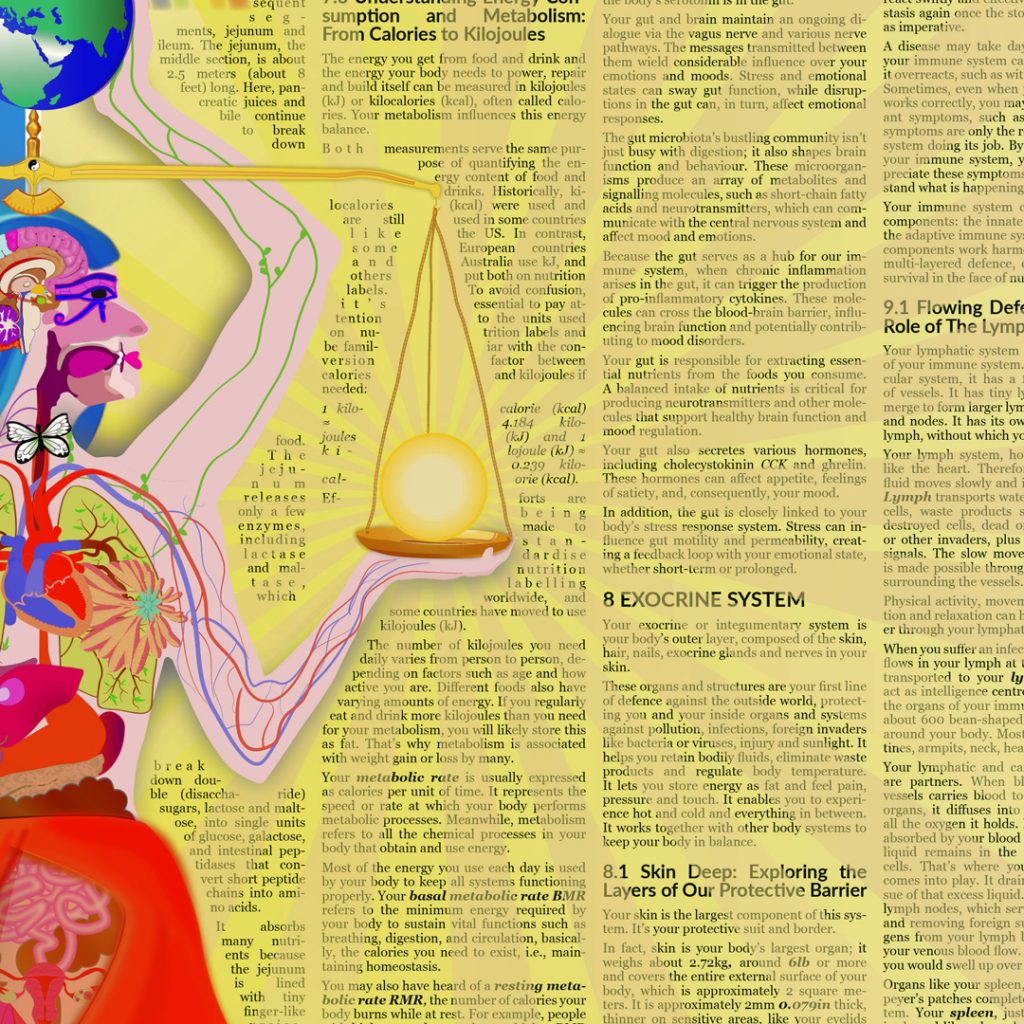
That’s part of why I created my Human Body Systems print. I didn’t want the body to stay hidden in the background, noticed only when it breaks. I wanted it to be seen, celebrated, and lived with as art. When I went through my own health struggles, I realised how quick I was to call my body “broken,” when in reality it was doing its absolute best for me, moment after moment, system after system. That realisation changed everything: my relationship to my health, my sense of gratitude, even the way I looked at myself in the mirror.
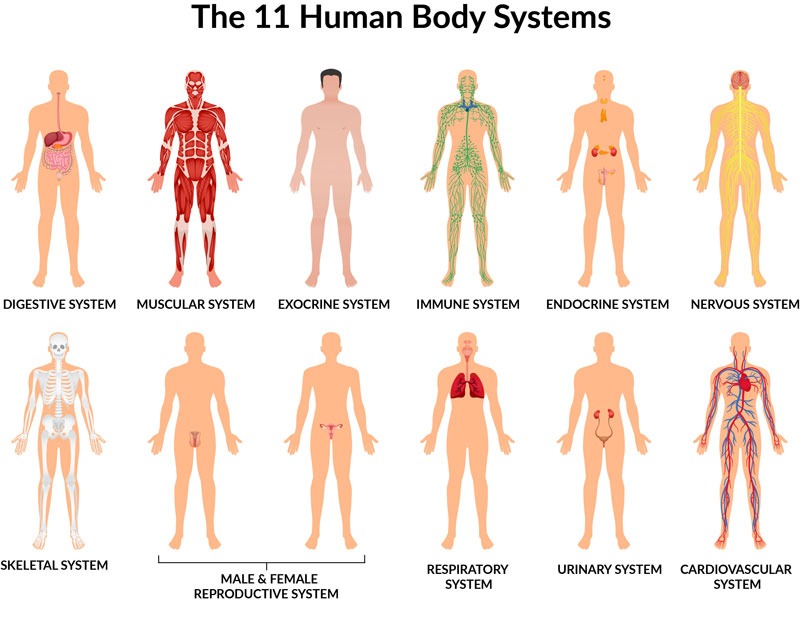
So let’s do this together: let’s get the human body systems explained. Not in textbook jargon. Not as flat diagrams. But as what they truly are, 11 genius networks working tirelessly for you, especially when you’re resting.
We live in a culture that treats the body like a machine. Fuel it, push it, fix it when it breaks. If something goes wrong, we focus on symptoms, never the symphony underneath.
But your body isn’t a machine. It’s alive, responsive, and more intelligent than we give it credit for. The truth is, your body’s busiest when you finally stop. Sleep is not a shutdown; it’s a coordinated repair shift. Even lying down to rest, all your “background apps” are still running.
That’s why I designed the Human Body Systems print. To put this knowledge into daily sight. To make invisible work visible. To remind you that even if your to-do list is full of failure and self-criticism, your body is winning a thousand battles you never see.
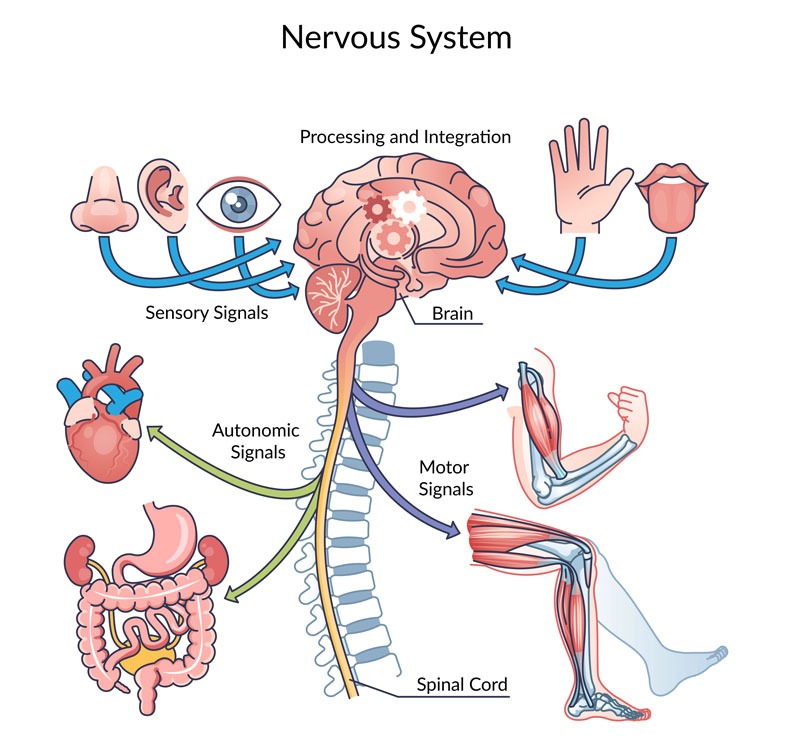
Your nervous system never takes a holiday. It’s the command centre that manages everything, and while you sleep, it gets busy with some of its most fascinating tasks.
During deep sleep, your brain consolidates memories. Think of it like a librarian, filing away the day’s chaos into neat shelves. At the same time, it prunes connections you don’t need anymore, like clearing out old emails from your inbox. That’s why you wake up with clarity, sometimes even sudden solutions to problems that felt impossible the day before.
Dreams? They’re part of the process. Your subconscious gets the night to play, rehearse, process emotions, even spark creativity. Paul McCartney said the melody of Yesterday came to him in a dream. That’s your nervous system flexing its creative muscles.
And beneath all that, it’s still keeping tabs on heart rate, breathing, blood pressure, like a conductor waving the baton even while the orchestra plays in the dark.
The cardiovascular system (sometimes called the circulatory system, though technically broader) is your heart, blood, and vessels. And honestly? It deserves a standing ovation.
While you rest, your heart continues its rhythm, sending blood through about 60,000 miles of vessels. That’s enough to wrap around Earth more than twice. Every single cell is nourished, oxygen delivered, waste carried away.
Sleep is when the cardiovascular system recalibrates. Blood pressure dips in deep rest, giving your arteries a break. During REM sleep, your heart rate rises and falls, mimicking the rhythms of waking life. It’s not random; it’s training, keeping your cardiovascular system flexible.
In one night, your heart might pump around 7,000 litres of blood. Imagine any other organ doing that amount of work without pause, without complaint, for a lifetime. According to the British Heart Foundation, your heart is a muscular pump designed for this relentless rhythm, and it never takes a break. It’s devotion in muscle form.
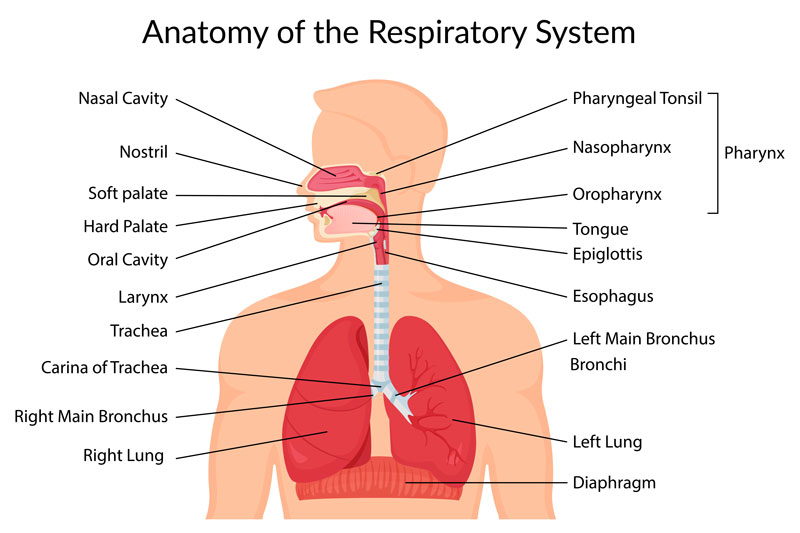
You don’t command your lungs to breathe when you’re asleep. They just do it. Your respiratory system adjusts automatically, slowing into deep, rhythmic breaths during deep sleep, then speeding up during REM.
It also knows how to self-correct. If oxygen dips too low, sensors in your brainstem trigger deeper breaths. If carbon dioxide builds, you’ll stir awake, even gasp, just to restore balance.
There’s a humility in that. Breathing is so ordinary that we forget it’s life. Yet without its unconscious loyalty, we wouldn’t last a few minutes. That soft rise and fall of your chest at night? That’s your body proving, over and over again, that it wants you alive.
The endocrine system is your body’s message network, delivering instructions via hormones. At night, it’s especially chatty.
Melatonin rises as light fades, telling your cells it’s time to repair. Growth hormone peaks during deep sleep, stimulating muscle repair, bone growth, and tissue renewal. This is why kids literally “grow in their sleep” and why athletes obsess over getting enough rest.
Meanwhile, cortisol, the stress hormone, dips at night to give your body space for healing. Then it climbs again toward morning, nudging you awake. It’s like a perfectly timed symphony, orchestrating rest, repair, and renewal.
The best part? You don’t have to micromanage any of it. Your body already knows the schedule.
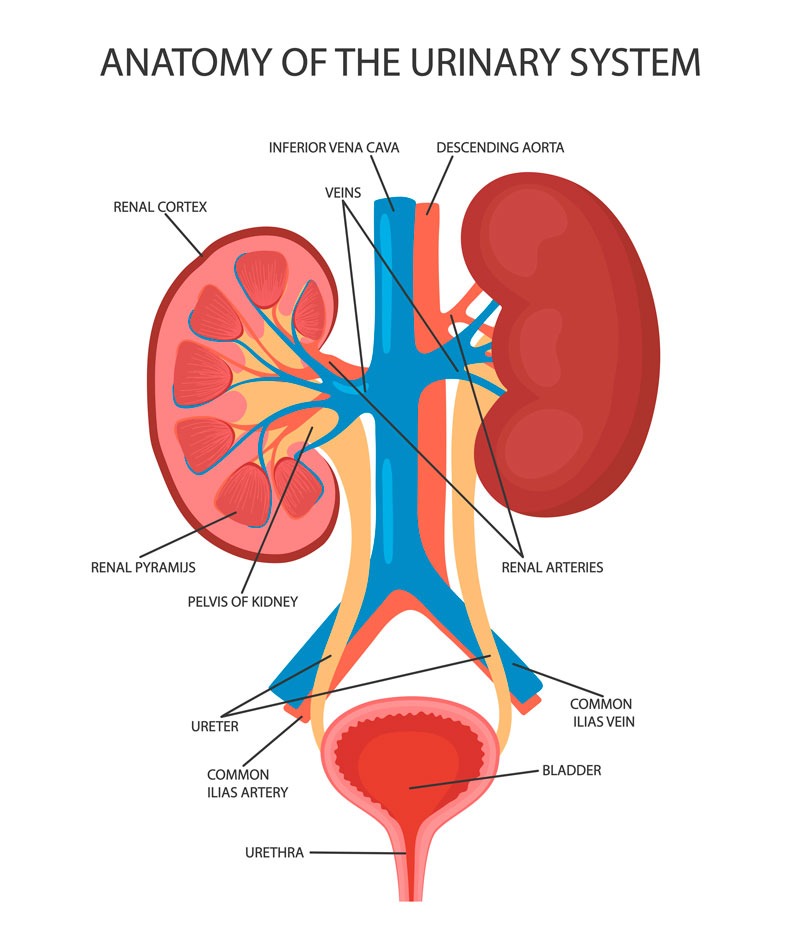
Your kidneys are small but mighty. About the size of fists, they filter all your blood around 40 times a day. That’s about 50 gallons daily, even while you sleep.
At night, they’re balancing electrolytes, removing toxins, and making sure your blood chemistry stays in the safe zone. They fine-tune pH, prevent dangerous buildup, and quietly prepare waste for excretion. That urge to pee in the morning? It’s not an inconvenience. It’s proof that your kidneys worked all night, taking out the trash so you could start the day with clean blood chemistry.
Even if you stopped eating hours ago, your digestive system is still buzzing. Food takes 6–8 hours to move through your stomach and small intestine. By bedtime, your gut is still absorbing nutrients, breaking down proteins, and handing off tasks to your microbiome.
And oh, the microbiome. Trillions of bacteria, fungi, and other microbes live in your gut, and many of them thrive in the dark hours. They help regulate your metabolism, produce vitamins, and even influence neurotransmitters that affect your mood.
Late-night snacking? It messes with the rhythm. But when you rest, your gut rests too, and that balance keeps your whole system in harmony.
The exocrine system doesn’t get headlines, but it deserves them. It includes your sweat, oil, and other glands that release substances outside your body.
At night, oil glands continue secreting sebum, keeping your skin supple and preventing cracks that could let in microbes. Sweat glands regulate micro-shifts in temperature. Even digestive glands, like those in your pancreas, release enzymes that quietly continue breakdown work.
This system is like the maintenance team in a building, you don’t notice them until the work stops. But their constant, quiet activity keeps your outer defences strong.
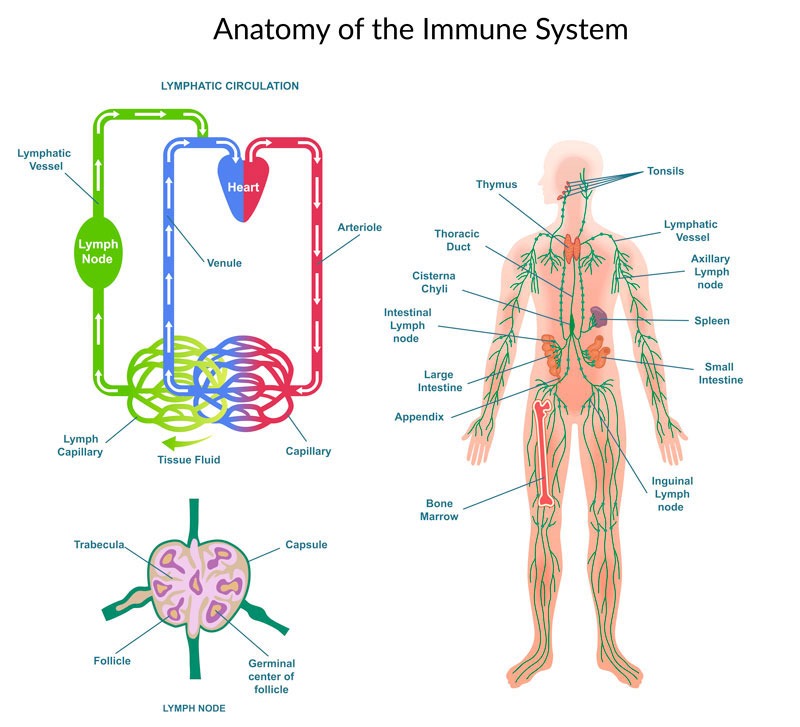
Your immune system is your private security force. And when you rest, it goes into high gear.
T-cells roam, identifying and binding to viruses. Natural killer cells hunt down infected or cancerous cells. Antibodies circulate like detectives, ready to flag threats. And the lymphatic system, part of your immune network, uses rest to clear out waste from the brain in a process called the glymphatic system.
That’s why sleep matters so much when you’re sick. As research from the NIH shows, people who sleep fewer than 7 hours are nearly three times more likely to catch a cold than those who get 8 or more. Rest isn’t laziness. It’s weaponising your immune system.
Bones aren’t static; they’re alive. While you rest, tiny cells called osteoblasts and osteoclasts are repairing microdamage and reshaping bone. It’s a slow but constant process of renewal.
Bone marrow inside your skeleton is equally busy, producing fresh red blood cells to carry oxygen, and white blood cells to strengthen immunity.
Even your spine benefits. Lying flat allows the discs between your vertebrae to rehydrate, reversing the compression of daily gravity. You literally wake up taller than when you went to bed.
Muscles repair best during sleep. Microtears from daily use, whether lifting weights or carrying groceries, are stitched back together with fresh proteins. This is how strength builds.
Meanwhile, during REM sleep, your body enforces a protective paralysis. It switches off muscle movement so you don’t physically act out your dreams. Imagine the chaos if this system failed; entire bedrooms would become danger zones.
When you wake up sore from exercise, that’s not failure. That’s proof your muscles are rebuilding, stronger than before.

Even in rest, the reproductive system keeps its cycles. In women, hormones shift across the month, regulating fertility, mood, and energy. At night, these hormones continue their rhythms, unaffected by your awareness.
In men, testosterone surges overnight, peaking in the early morning. This isn’t just about reproduction; it also helps with tissue repair, bone density, and mood regulation.
This system carries the blueprint of life itself, and it keeps moving whether or not you’re paying attention.
Underneath all these systems are the true foundations: atoms forming molecules, molecules forming cells, cells building tissues, tissues creating organs. None of them rest.
Cells are constantly repairing DNA, mitochondria churn out energy, proteins fold and refold, tissues knit themselves together after microdamage. Even at the smallest level, your body is a hive of activity.
That’s why I included this “building blocks” section in the Human Body Systems print. Because awe isn’t just in the big systems; it’s in the microscopic hustle that never quits.
This print was born out of frustration and awe. Frustration with the way medical knowledge is often presented: sterile, lifeless, and inaccessible. And awe at discovering how much was actually happening inside me, even when I felt broken.
After some challenging years with fertility and hormone issues, I wanted to reclaim my body. To stop seeing it as something that needed fixing and start working with it instead of against it. Learning about these systems, how tirelessly they work, day and night, gave me back compassion for myself and my body.
I wanted to share that feeling. To point out the wonders of your body in the hope that people would treat it better. Like the temple it is.
So I made the print. Not just as art, but as a daily reminder. Something you hang on your wall that whispers: “You are already amazing. Start showing up for yourself that way. You are worth it.”
When you understand these systems, something changes. You stop resenting your body. You stop seeing rest as weakness.
Instead, you see fatigue as communication, digestion as partnership, sleep as strategy. You realise your body isn’t against you; it’s for you, all the time.
Knowledge creates compassion. Awe creates patience. And together, they shift the way you live inside your skin.
“Awe is medicine. The more you marvel at your body, the more you want to care for it.”
Conclusion: Smarter Than You Think
So here they are, the human body systems explained: nervous, cardiovascular, respiratory, endocrine, urinary, digestive, exocrine, immune, skeletal, muscular, and reproductive. Eleven interconnected, tireless systems working for you, even while you rest.
Your body is smarter than you think. Smarter than most of us ever give it credit for. Smarter in ways that deserve respect, gratitude, and awe.
That’s the real reason behind my Human Body Systems print. It’s not just about learning anatomy; it’s about remembering. Remembering that your body is alive, intelligent, and deeply on your side.
And once you see that, I hope something shifts. Awe naturally leads to care. When you realise how much your body is already doing for you, nourishing it stops being a chore and starts feeling like an honour. Eating food that fuels you. Moving. Stretching. Resting. These become acts of gratitude, not punishment.
So let this knowledge live with you. Put the print on your wall. Let it remind you daily of the genius humming beneath your skin, and let that reminder guide how you treat yourself.