
By Julia de Schultz, May 5, 2026
There is something almost unbelievable about ordinary life.
You wake up. You sit up. You brush your teeth. You answer a message. You make tea. You go to work. You walk through rooms and think about deadlines and dinner and whether you replied to that email. It all feels normal. Familiar. Automatic.
But inside you, nothing about it is simple.
From the moment you wake, your body systems from morning to night are coordinating an astonishing number of tasks. Hormones shift. Your lungs exchange gases. Your heart keeps blood moving. Your kidneys filter and rebalance. Your digestive system breaks down food into usable parts. Your nervous system sends signals in every direction. Your immune system keeps watch. Even while you sleep, your brain and body remain active. Sleep is not shutdown. It is another phase of deeply organised work. Seen as a whole, your body systems from morning to night form a continuous story of timing, communication, repair, and response.
We often speak about the body as if it is one thing. But in lived reality, it is more like an orchestra: distinct sections, different rhythms, constant communication, and no true pause. However we choose to divide and name its systems on a chart, the deeper truth is the same. The body is not static. It is a living collaboration. And one of the most beautiful ways to understand it is to follow it through an ordinary day. That is what makes understanding your body systems from morning to night so powerful: it helps you see ordinary life in a completely different way.

Long before you consciously “start the day,” your body has been preparing for it.
Your sleep-wake cycle is shaped by internal clocks that run on roughly 24-hour rhythms and are influenced by light, darkness, and daily routines. In the evening, your brain releases melatonin in response to darkness, helping time your circadian rhythms and support sleep. As morning approaches and light increases, melatonin falls and cortisol helps prepare your body to wake. In other words, waking is not a switch you flip. It is a transition your body has been choreographing in advance.
Even in those first quiet minutes, several systems are already working together. Your nervous system is relaying signals between brain and body. Your circulatory system is still carrying oxygen and nutrients where they are needed. Your lungs are exchanging oxygen and carbon dioxide. Your kidneys have continued filtering blood, removing waste and helping maintain the balance of water, salts, and minerals your tissues depend on.
This is one of the first perspective shifts that knowledge gives us: waking up is not the moment the body begins. It is the moment consciousness catches up with what the body has already been doing. This is one of the wonders of your body systems from morning to night: they begin preparing for your day before you are fully aware of it.

The first time you stand up, stretch, walk to the bathroom, reach for a mug, or climb the stairs, you are watching cooperation in motion.
Your nervous system sends signals between your brain, spinal cord, peripheral nerves, muscles, and organs. Peripheral nerves help carry messages that control movement, breathing, heartbeat, digestion, and more. Muscles respond to electrical signals from nerves. Skeletal muscles work with bones, tendons, joints, and ligaments to create movement, support posture, stabilise joints, and even help maintain body temperature.
None of that feels dramatic when you are just crossing the room. But the ordinary is often where the body is most astonishing. Movement is not merely “moving.” It is sensation, signal, contraction, balance, support, oxygen delivery, and energy use happening together in real time. Your skeleton gives structure and protection. Your muscles provide force. Your nerves coordinate timing. Your heart and lungs help sustain the effort.
The body makes this look effortless. That may be one reason we forget how much intelligence is built into even the smallest act. When you follow your body systems from morning to night, even something as simple as standing up starts to look extraordinary.

Breakfast can feel mundane. Toast. Fruit. Coffee. Yoghurt. Eggs. Something quick. Something comforting. But inside, an extraordinary process begins.
The digestive system is not simply a tube food falls through. It is an active system made up of the gastrointestinal tract along with organs such as the liver, pancreas, and gallbladder. Food moves through the GI tract by peristalsis, wave-like muscle contractions that push and mix it along. Digestion breaks food down into nutrients the body can use for energy, growth, and cell repair. The pancreas contributes enzymes that help break down carbohydrates, fats, and proteins.
This is one of the body’s quiet miracles: it takes the outside world and turns it into you. Matter becomes fuel. Nutrients are absorbed. Energy is released. Tissue is supported. Signals are influenced. The body does not simply receive food. It interprets it, sorts it, breaks it down, absorbs what it can use, and sends the rest onward.
And digestion does not happen in isolation. Your circulatory system helps transport absorbed nutrients. Your endocrine system helps regulate how energy is stored and used. Your nervous system influences appetite, motility, and communication between gut and brain. The systems overlap because life itself overlaps. This is why your body systems from morning to night depend on digestion not as a side process, but as a central act of transformation.

It is easy to forget the sheer logistical genius of blood flow.
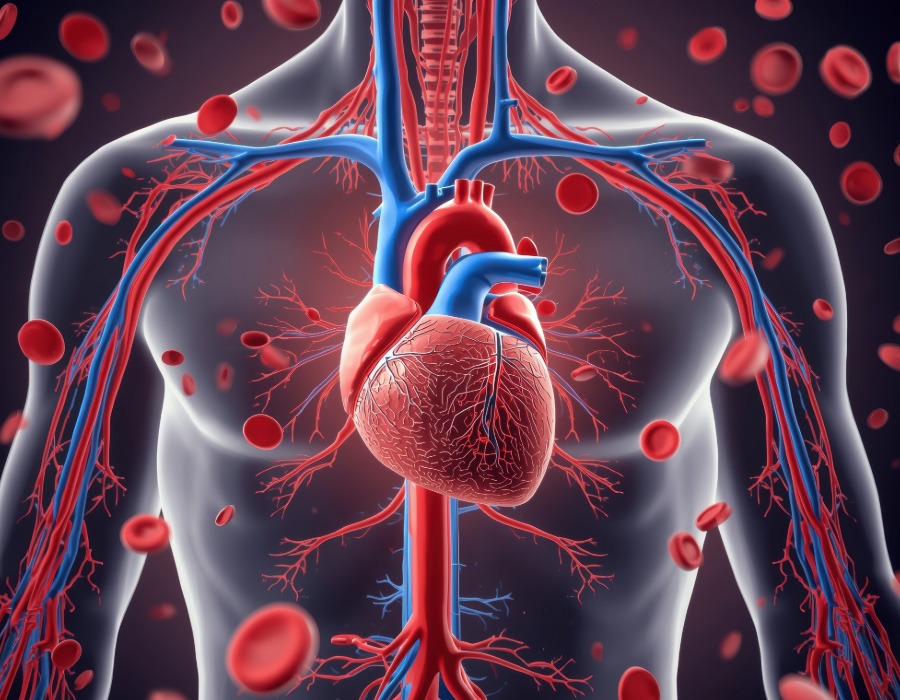
Your heart and blood vessels keep blood moving through the body. Arteries carry blood away from the heart, veins bring it back, and capillaries are where oxygen, nutrients, and waste are exchanged with tissues. The respiratory system works closely with the circulatory system: the lungs oxygenate blood, and the circulatory system helps deliver that oxygen and nutrients to tissues and organs while also helping remove carbon dioxide and waste products.
Every meeting you sit through, every errand you run, every sentence you read is supported by this constant transport network. It does not care whether you are doing something glamorous or forgettable. It continues anyway. That constancy is one of the body’s most moving qualities. It serves the whole without asking to be noticed.
And of course, it never works alone. Blood is not just carrying oxygen. It is also carrying nutrients, hormones, immune cells, and chemical messages. The circulatory system is not only transport. It is communication.
Few organs are so essential and so rarely appreciated in daily imagination as the kidneys.
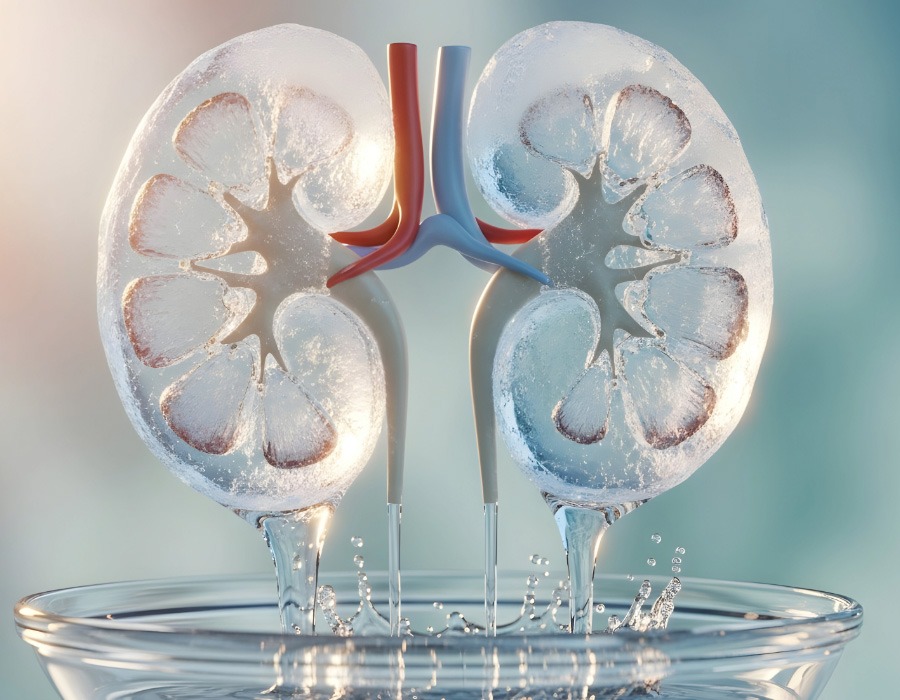
Healthy kidneys filter about half a cup of blood every minute, removing waste and extra water to make urine. They also help maintain a healthy balance of water, salts, minerals, and acid in the body. Without that balance, nerves, muscles, and other tissues would not work normally. The kidneys also make hormones that help control blood pressure, make red blood cells, and keep bones strong.
So while you are answering emails or walking to the shops, your urinary system is doing something deeply intelligent: sorting, filtering, balancing, deciding what stays and what goes. It is one of the clearest examples of the body as a place of ongoing judgement. Not conscious judgement, but physiological discernment. Keep this. Release that. Adjust this level. Stabilise this environment. Life depends on thousands of such decisions, most of them invisible.
Most of the time, if your immune system is doing its job well, you do not feel it.
The immune response is how the body recognises and defends itself against bacteria, viruses, and other substances it identifies as foreign or harmful. It is not only something that matters when you are ill. It is part of the body’s ongoing vigilance. Research supported by NIH has also linked good-quality sleep with immune function, underscoring that immune health is woven into daily rhythms, not separate from them.
There is something almost poetic about this. Beneath awareness, the body is keeping watch. Not in a paranoid way, but in a faithful one. Monitoring. Distinguishing. Responding. Protecting. It reminds us that health is not only about performance. It is also about care.
The middle of the day often feels mentally crowded but physically unremarkable. Yet regulation continues everywhere.
Your nervous system keeps sending messages back and forth between brain and body. It helps control movement and sensation, but also internal functions such as breathing, blood pressure, and digestion. Your muscles continue supporting posture even when you are sitting. Your circulatory system continues moving oxygen and nutrients. Your kidneys keep filtering. Your digestive system may still be breaking down, absorbing, and moving what you ate earlier. None of this requires your attention, but all of it requires your body’s.
This is one reason body knowledge can be so perspective-shifting. It softens the habit of speaking to ourselves as if we are lazy, broken, or “not doing enough.” Your body is doing enough. It is doing an extraordinary amount. Even on an ordinary Tuesday.

Even before you decide to slow down, parts of your physiology are already responding to the changing light.
Exposure to darkness supports melatonin production, which helps with the timing of circadian rhythms and sleep. The amount of melatonin in the bloodstream tends to increase in the evening and peak in the early morning, while cortisol helps prepare the body for wakefulness as light returns. These shifting signals help the body move from one mode of the day into another.
That change of tone matters. Evening is not just “later in the day.” It is a physiological descent. A rebalancing. A softening of outward effort and, ideally, a preparation for restoration. When we live in ways that constantly override that rhythm, something important is lost. Not just sleep itself, but the body’s sense of timing.

Sleep can look passive from the outside. From the inside, it is active, structured, and essential.
Sleep is a natural process that helps the body restore energy, supports learning and memory, and keeps us healthy. While you are sleeping, your brain and body functions are still active, and you cycle through stages of sleep in a predictable pattern. Good-quality sleep also supports the heart and blood vessels and the immune system; over time, inadequate sleep is linked to higher risk of several chronic health problems.
So the day does not end when you close your eyes. It changes form. Repair, recalibration, memory processing, hormone timing, immune support, cardiovascular recovery, respiratory rhythm, and fluid balance continue through the night. Your kidneys still filter. Your heart still pumps. Your lungs still exchange gases. Your brain still cycles through states that matter deeply for life the next day.
And this may be one of the most comforting truths about the body: even in rest, it does not abandon you. It keeps tending to life from the inside.

To understand your body systems from morning to night even a little is to become more respectful of the life unfolding inside you.
Not because it is fragile, though parts of it can be. And not because it is perfect, because bodies are vulnerable, variable, and human. But because the body is doing something profoundly generous all the time. It is translating matter into movement, air into oxygenation, food into fuel, sleep into repair, signals into action, rhythm into survival. It is working across systems, minute by minute, to keep a life going.
That is why learning about the body is more than collecting facts. It changes the emotional relationship. The body becomes less of an object to criticise and more of a process to honour. Less of a machine we take for granted and more of a living intelligence we are being carried by.
And perhaps that is one of the deepest reasons this knowledge belongs on a wall, not just in a textbook.
Because when you see the body not as a problem to fix but as a world to understand, something shifts. The more clearly you see your body systems from morning to night, the harder it becomes to take them for granted.
You become a little more patient.
A little more grateful.
A little more amazed by the life you are already inside.