
By Julia de Schultz, March 3, 2026
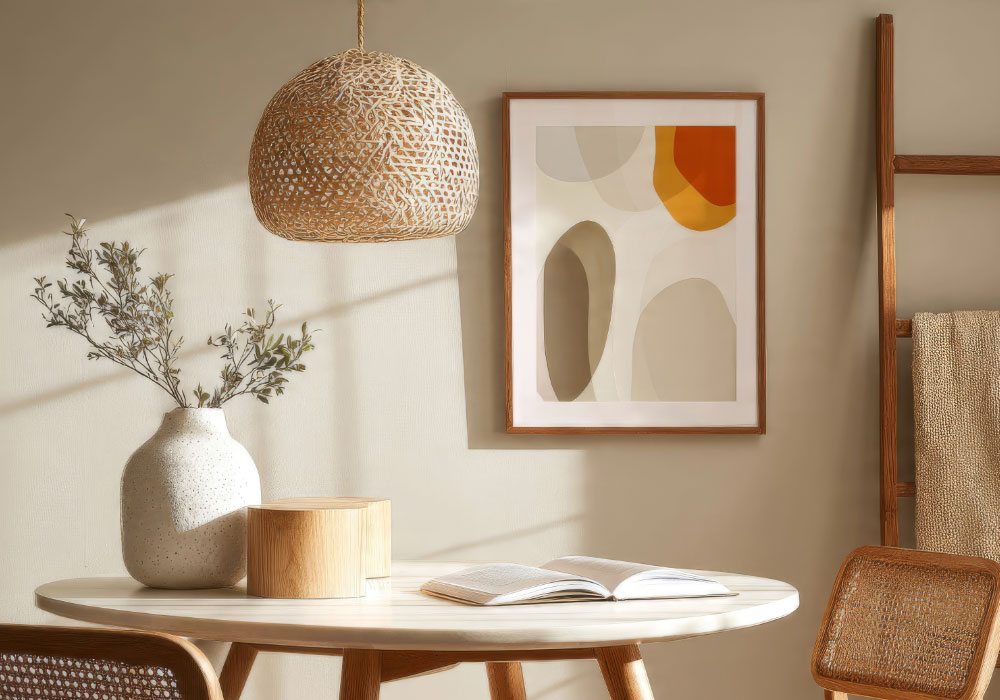
There’s a moment that happens in almost every home, and it’s so ordinary we barely notice it.
You walk past the same wall. Again. You’re holding laundry, or your phone, or a cup of tea you made and forgot you made. Your mind is already in tomorrow. Your body is still in yesterday. And as you pass, your eyes catch something.
A colour. A face. A shape. A quote.
It might only be for half a second, but something in you registers it. Like your nervous system takes a little note. Like your brain says, “Yes. This is where we live.”
We talk about our homes as if they’re neutral containers. A place where life happens. A backdrop. But research suggests our environment and mental health are deeply connected, from noise and housing to stress and wellbeing.
But your walls are not neutral.
The art you choose is not just decoration. It’s a form of environment design. It’s an emotional climate. It’s a daily message you live inside.
And if you’ve ever wondered what the art you choose says about you, the answer is: more than you think.
Not because art is some personality test with a neat score at the end, but because taste is rarely random. It’s a trail of breadcrumbs. A quiet biography. A set of preferences that often points straight to your values, your unmet needs, your memories, your identity, and sometimes even your healing.
And here’s the twist that makes this even more interesting.
Your space does not only mirror you.
It also shapes you. If you’re curious what that looks like in practice, explore the prints here.
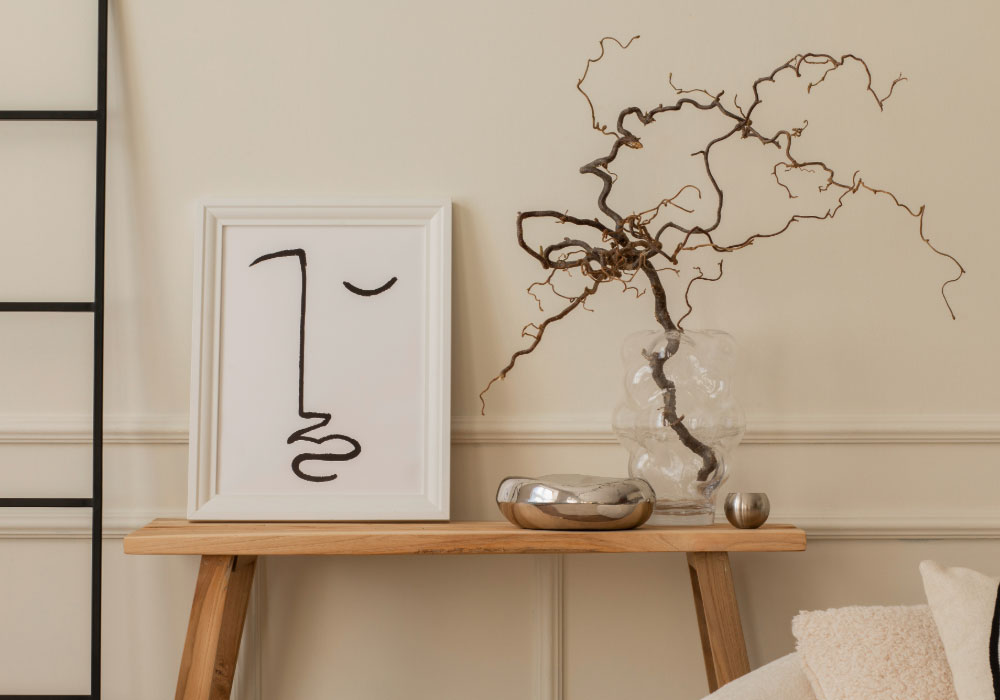
Think of your home like a mirror that also whispers back.
You choose what you put on the walls, and then what’s on the walls subtly changes what you notice, what you feel, what you remember, and what you repeat.
This is why two people can walk into the same room and have completely different reactions. One feels calm. One feels restless. One feels inspired. One feels overwhelmed.
Because we’re not just looking at art.
We’re receiving it.
Every day, in tiny doses, like light through a window.
So before we go any further, I want to make something clear. This is not about judging taste. This is not “minimalists are enlightened” and “maximalists are chaotic” or any of that nonsense.
This is about curiosity.
Because the art you live with is often a clue to what you’re craving. And sometimes, it’s a clue to what you’re ready for next.
If someone walked through your home slowly, what would they learn about you without you saying a word?
Not your job title. Not your achievements. Not your to-do list.
I mean the real things.
What you find beautiful.
What you find important.
What you return to.
What you want more of in your life.
Art is one of the few things we choose purely because it feels like something. Even when we say, “I just like it,” there’s usually a deeper reason hiding in that sentence.
Sometimes the reason is memory. A print that reminds you of your grandmother’s house. A painting that feels like your childhood. A photograph that looks like a place you once felt free.
Sometimes it’s longing. You choose oceans because you want more breathing space. You choose mountains because you want steadiness. You choose bright colours because you’re hungry for aliveness.
Sometimes it’s identity. You choose abstract art because you’re a pattern-seeker, someone who likes meanings that unfold over time. You choose portraits because you’re drawn to humanity and emotion. You choose typography because words are your anchor. You choose maps because you love context, travel, perspective, the feeling that life is bigger than today.
And sometimes it’s simply this: the art feels like permission.
Permission to slow down.
Permission to dream.
Permission to feel.
Permission to be more than practical.
If you’ve ever bought a piece of art during a transition, a breakup, a new chapter, a new home, a new version of yourself, you already know this.
We don’t just decorate rooms.
We mark eras.
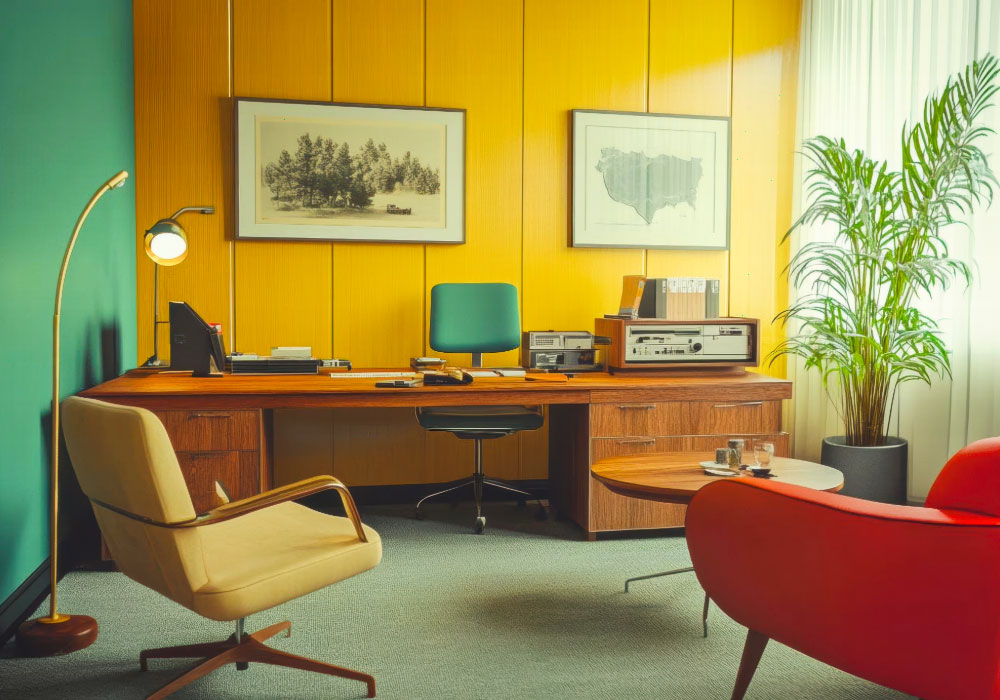
We tend to think of “mood” as something that happens inside us, like weather in the mind.
But mood is also environmental. It’s partly created by what surrounds you.
Your nervous system is constantly scanning: safe or unsafe, calm or alert, open or guarded. And visual input matters.
That’s why some rooms feel like an exhale, and some rooms feel like a performance.
Art contributes to that more than we realise, because art is concentrated feeling.
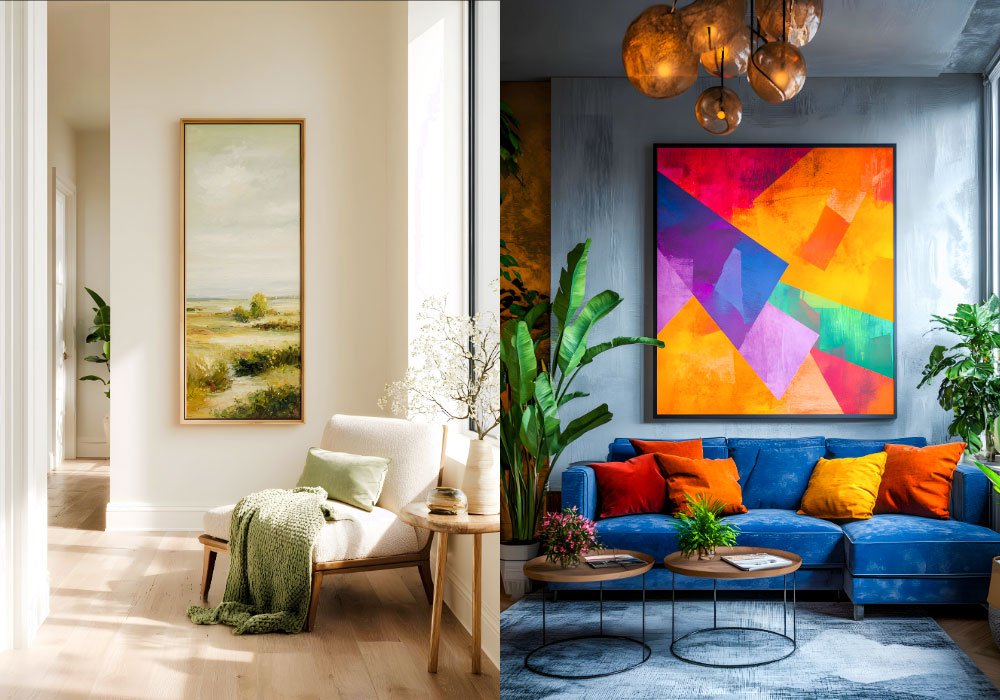
A soft landscape can act like a deep breath.
A sharp geometric piece can feel like focus.
A chaotic image can feel like stimulation, or like overwhelm, depending on your current season.
A dark piece can feel like depth, or like heaviness, depending on what you’re carrying.
This is why the same artwork can be perfect for one person and wrong for another. It’s not about “good taste”. It’s about nervous system compatibility.
And there’s another layer: the art you choose often reveals what your nervous system is trying to regulate.
If you’re chronically overstimulated, you may find yourself drawn to calm palettes, spacious compositions, gentle shapes, simple forms.
If you’re chronically bored or emotionally flat, you may find yourself drawn to saturation, contrast, texture, drama, unusual subjects.
If you’ve lived through chaos, you might crave order.
If you’ve lived inside strictness, you might crave freedom.
So sometimes, what the art you choose says about you is not “this is your personality.”
Sometimes it says: “This is what you need.”
There’s a line often attributed to Earl Nightingale: we become what we think about. And it’s true in a very practical, everyday way… because what you see influences what you think about.
Your environment feeds your mind on repeat.
So when you live with certain images, words, symbols, and ideas on your walls, you’re not just “looking at art.” You’re giving your attention a default direction. You’re rehearsing a message. You’re reinforcing an identity cue — quietly, consistently, without needing motivation.
That’s why the art you choose can become more than style. It becomes a kind of mental soundtrack.
Your environment is full of identity cues.
Tiny signals that remind you who you are, and who you are allowed to be.
A guitar in the corner says, “You are someone who plays.”
A yoga mat visible says, “You are someone who moves.”
A shelf of books says, “You are someone who learns.”
A wall of family photos says, “You belong.”
Art does this too, just in a more symbolic way.
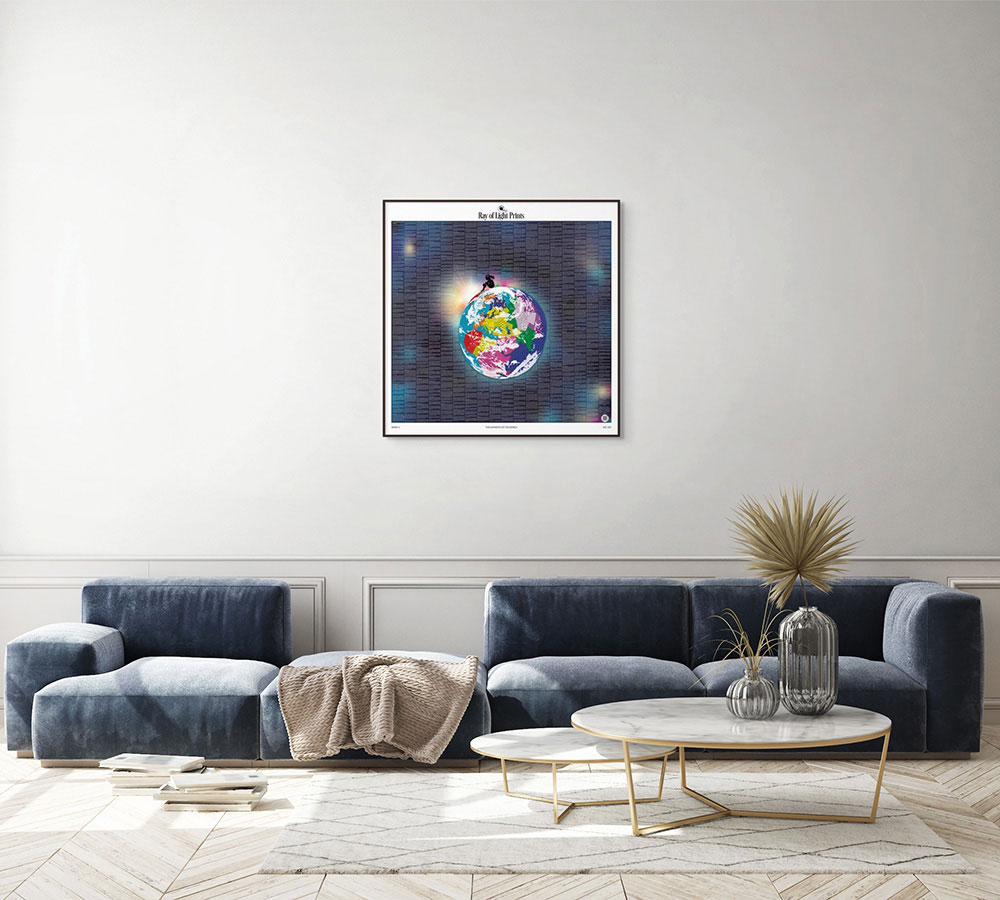
A quote on your wall becomes the sentence you return to when your mind wobbles.
An image of the cosmos becomes a reminder that your problems are real, but not always the whole universe.
A diagram of the human body becomes a quiet invitation to treat yourself like something worth understanding.
A periodic table becomes a daily nudge to look at ordinary objects and see the hidden architecture behind them.
This is one reason “motivational décor” sometimes feels cheesy and sometimes feels life-changing. It depends on whether it’s real for you.
Because the difference between aspirational and performative is simple:
Aspirational art makes you feel more like yourself.
Performative art makes you feel like you’re trying to be someone else.
Aspirational art is a mirror angled slightly forward. It reflects you, but it also reflects your direction.
And that’s where it gets exciting.
Because you can choose art not only as a reflection of who you are today, but as a reminder of who you’re becoming.
Let’s talk about the slightly awkward part.
Art is also social language.
It signals things. Education. Taste. Culture. Wealth. Politics. Spirituality. Humour. Identity.
Sometimes we choose art to express ourselves.
Sometimes we choose art to belong.
Sometimes we choose art to impress.
And even if you swear you don’t care what anyone thinks, there is still one person you are always signalling to.
You.
Your private self.
The one who sees the wall when the door is closed, when nobody is visiting, when you’re in your pyjamas, when you’re not “on”.
Your art tells that self what matters.
This is why a home can look perfect on Instagram and still feel empty to live in. Because the art is performing for the outside world, not feeding the inner world.
And it’s also why a slightly imperfect home can feel deeply comforting. Because the art is honest.
A home that mirrors you does not always look curated.
It feels inhabited.
It feels like a life.
Here’s a fun experiment: imagine your home as a set of different selves.
Not in a dramatic way. Just in a human way.
We are not one mood. We are a collection.
The you who rests.
The you who works.
The you who plays.
The you who heals.
The you who parents.
The you who dreams.
Different rooms can support different versions of you. Art can do that intentionally, like emotional architecture.
Bedroom art is not for performance. It’s for your nervous system.
This is where you want fewer sharp edges, fewer mental hooks, fewer “things to solve.” Unless you love that, of course. But for most people, bedroom art is better when it says:
You’re allowed to stop.
Gentle nature. Simple abstraction. Soft colours. Something that feels like quiet.
The kitchen is where life gets made. Not just food, but routines, family identity, daily rhythm.
Kitchen art can be playful, warm, energising. It can be the kind of piece that makes you feel like, “Yes, we live here, we eat here, we gather here.”
Hallways are underrated. They’re transition zones.
They’re where you leave, return, rush, arrive, reset.
A single piece in a hallway can become a daily anchor. A reminder as you step out. A welcome as you step back in.
If you want to be intentional, choose hallway art that sets the tone of your day.
Not “be productive.”
More like: remember what matters.
Workspace art is fuel. It’s a cue.
It can say:
Go deeper.
Stay curious.
Keep building.
Make the brave choice.
Do the work that matters.
This is one reason educational and idea-rich prints work so well in workspaces. They hold your attention in a steady way, like a mental posture.
They don’t just decorate the wall.
They shape the mind that sits beneath them.
Most modern content is designed to be consumed quickly.
Scroll.
Like.
Forget.
But the best art does the opposite.
It stays.
And it reveals itself slowly.
This is where “slow content” becomes more than a phrase. It becomes a lifestyle choice. Because living with art that contains layers, symbolism, information, and meaning changes the way you move through your own life.
You start noticing connections.
You read a line on the wall and it follows you into the day.
You glance at an image and it changes how you see something ordinary.
You walk past the same piece hundreds of times, and on the 137th time you suddenly see something you missed.
This is one of my favourite things about information-rich artwork. Not because everyone should want dense prints, but because it invites a different relationship with learning.
Learning not as a task.
Learning as an atmosphere.
It’s a reminder that knowledge can be beautiful.
That beauty can be intelligent.
That your home can feed your mind, not just your eyes.
And if you’ve ever felt like you’re craving depth in a shallow world, this might be what your art choices are trying to tell you.
Let’s play with a few “types” here. Not as boxes, but as mirrors.
If you recognise yourself in one, smile. If you recognise yourself in three, even better.
If you’re drawn to minimalism
You might be someone who craves clarity.
Not emptiness, but space.
Minimalist art often reflects a desire for calm, order, and breathing room. It can also be a boundary, especially if your life feels loud.
Sometimes minimalism says: “I’ve had enough noise.”
Sometimes it says: “I’m learning what is essential.”
If you’re drawn to maximalism
You might be someone who experiences life with appetite.
Maximalist art often reflects a love for story, texture, colour, memory, layers. It can be a celebration of abundance, a refusal to flatten yourself into something tidy.
Sometimes maximalism says: “I’m allowed to be a lot.”
Sometimes it says: “I want my home to feel like a novel, not a showroom.”
If you’re drawn to nature
You might be someone who needs grounding.
Nature art often reflects a desire to return to something older than deadlines. Something that doesn’t rush you. Something that reminds you: you are an animal too, and your nervous system remembers forests.
Sometimes nature says: “Come back into your body.”
Sometimes it says: “There is a rhythm bigger than your stress.”
If you’re drawn to the cosmos and big ideas
You might be someone who needs perspective.
Cosmic art, science art, conceptual art often reflects a mind that finds comfort in scale. In meaning. In awe.
Sometimes the universe on your wall says: “Your problems are real, but they are not the whole story.”
Sometimes it says: “Keep looking up.”
If you’re drawn to words and typography
You might be someone who is led by language.
You regulate through sentences. You anchor through phrases. You build identity through meaning.
Word art can be a form of self-leadership. A chosen thought made visible.
Sometimes it says: “I’m rewriting my inner monologue.”
Sometimes it says: “This is the belief I’m practising.”
If you’re drawn to portraits and faces
You might be someone who is deeply human-focused.
You’re interested in emotion, psychology, intimacy, story. You want to feel seen, or you want to understand others.
Sometimes faces on a wall say: “I care about what’s happening inside people.”
Sometimes they say: “I’m learning to look at myself more honestly.”
If you’re drawn to collecting and eclectic pieces
You might be someone who values continuity.
A collector’s wall often reflects memory, sentiment, identity across time. It can be a way of saying: “My life matters. My moments matter. I keep what shaped me.”
Sometimes it says: “I’m building a sense of self that lasts.”
And yes, you can be all of these. Humans are not one-note.
Your walls don’t have to match in style to match in meaning.
If you’re the kind of person who can overthink, this section is for you.
Choosing art can become a strange spiral of questions: Does this go with the sofa? Is this timeless? Is this “me”? Is it weird? Is it too much? Will I regret it?
Here’s a calmer way.
Ask these three questions:
1) What do I want to feel here?
Not what do I want the room to look like. What do I want it to feel like.
Calm? Warm? Brave? Spacious? Playful? Held? Energised?
2) What do I want to remember here?
A truth you forget when you’re stressed. A perspective you lose when life speeds up. A feeling you want more of.
3) What do I want to become here?
This is the future-self question. Not in a pressured way. In a gentle way.
Who are you practising being?
Then, do a quick wall audit.
The Wall Audit (5 minutes)
Stand in the room and look at what’s already there.
That last question is gold.
Because it usually points straight to the most honest art in your home.
And from there, the goal is not perfection.
It’s coherence.
Not matching frames. Matching meaning.
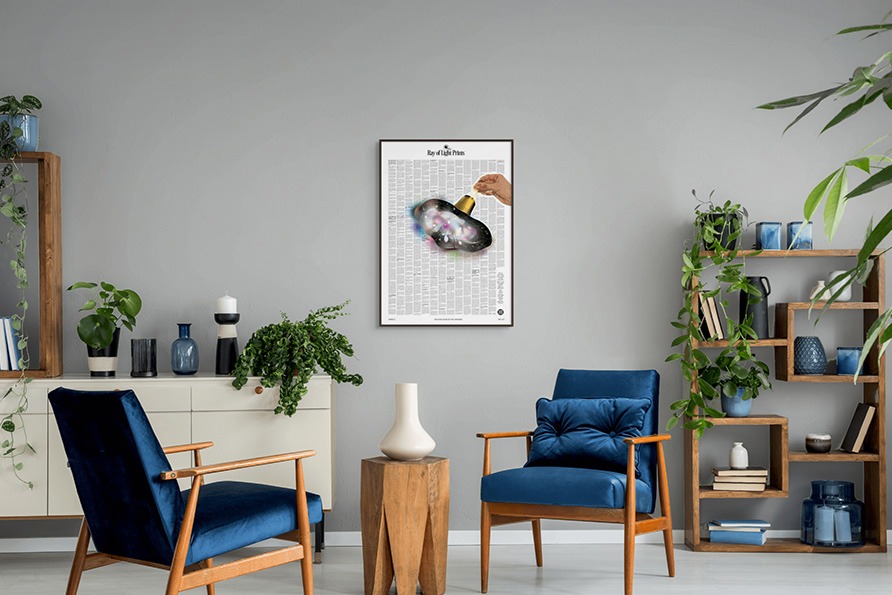
Your home is one of the few places where you get to decide what surrounds your mind.
You don’t choose the billboards.
You don’t choose the headlines.
You don’t choose what the world shouts at you.
But you can choose what whispers to you in the place where you live.
You can choose reminders that make you feel steady.
You can choose images that bring you back into awe. If you’re curious, here’s a beautiful overview of the science of awe.
You can choose words that soften your inner critic.
You can choose art that makes you more curious, more grateful, more present.
And you can change your mind whenever you change.
Because the most beautiful homes are not the ones that stay the same.
They are the ones that evolve honestly.
So if you want a simple takeaway, here it is:
Pick one wall.
Ask what you want it to say to you every day.
Then choose one piece that tells the truth.
Not the aesthetic truth.
The personal truth.
The kind that feels like recognition.
The kind that makes you exhale as you walk past it, holding laundry, holding your phone, holding your life.
Because your space is your mirror.
And if you choose carefully, it can also be your teacher.
If you want your walls to become gentle teachers, you can explore our prints here.
And if you’re in a reflective mood, you can read more articles like this here.